


About Ellie

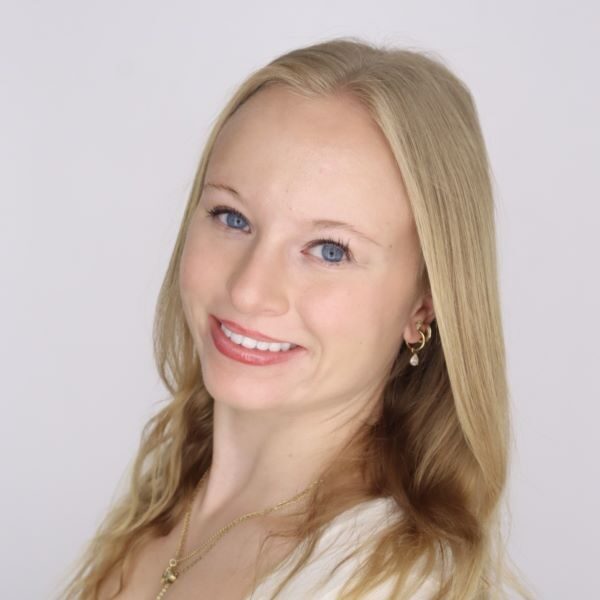
Ellie Helgeson is a first-year AuD student at the University of Iowa. She earned a dual Bachelor of Science in Communication Sciences and Disorders and Human Development and Family Sciences from Florida State University in May 2025. Ellie aspires to become a pediatric audiologist with a focus on serving underserved communities. In addition to her coursework and clinical training at the UI Speech and Hearing Clinic, she works in the UI Student Disability Services office, volunteers as a medical interpreter at the Iowa City Free Medical Clinic, and is a member of the UI Graduate Engagement Corps. Her leadership experience includes eight years with Best Buddies, culminating in her role as Vice President overseeing Florida State University’s 300+ member chapter. Outside of audiology, Ellie enjoys running, reading, and traveling.

If you could change one thing about the profession of audiology, what would it be?

If I could change one thing about the profession of audiology, I would want audiologists in general to be much more recognized for the work that they do. Too often, I am asked what audiology is. This seems to be a relatively common experience with audiologists, who are frequently confused with other professionals. It’s a relatively new field, and audiologists are still working today to have their expertise recognized in the medical field. Currently, the profession is at risk of no longer being considered a professional degree by the Department of Education, which further undermines the value of audiology as a whole. Not only that, but as the degree to become an audiologist has changed from a master’s to a doctorate, it raises the question of the value of the degree and whether audiologists should be paid more for the extensive schooling and rigorous clinical work they undergo. At the Iowa Speech-Language-Hearing Convention this fall, it was noted at a roundtable discussion that many young professionals felt they were putting themselves in debt without knowing for sure that their AuD would be worth that debt. Without a doubt, audiologists should be recognized and fairly compensated for the work that they do worldwide, especially as it’s a rapidly growing and changing field.

What unique traits or skills will you bring to a leadership position with the national SAA?

One unique trait I have is my commitment to learning another language and understanding backgrounds outside of my own. This is best illustrated in my work as a volunteer medical interpreter for the Iowa City Free Medical Clinic, as well as my past role as a Program Assistant in Valencia, Spain. The medical interpreting role entails translating for primarily Spanish-speaking patients to doctors, patient guides, nurses, and receptionists, and aiding in administrative tasks that involve Spanish materials. While I do not speak Spanish natively, I have spent years learning the language, as I have always wanted to become a bilingual audiologist in the future who is able to service patients both in English and Spanish. While the medical translating role is not always easy, often requiring me to study medical terminology and practice my listening comprehension, it has been incredible to work towards a future in Iowa where healthcare is accessible to all. As a Program Assistant, outside of other duties, I took on a translating role for English-speaking students in Spanish hospitals, clinics, and airports. In sum, from these experiences, I have a greater appreciation for global healthcare and the work that is done to increase its accessibility. This global perspective and understanding of cultures and languages outside my own is a unique trait I might bring to the Board of Directors.